
PHYSIOLOGY RESEARCH
INSTAR's physiology program investigates how organ systems function, adapt, and maintain homeostasis across the lifespan and under environmental stress. Integrating molecular mechanisms with whole-organism measurement, our research connects cellular signaling events to the cardiovascular, respiratory, renal, endocrine, and musculoskeletal phenotypes that determine human health and performance — an approach essential for translating basic physiological science into evidence-based clinical and public-health guidance.
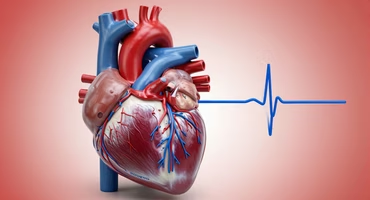
Cardiovascular Physiology
INSTAR cardiovascular physiology research examines cardiac electrophysiology, vascular biology, and hemodynamic regulation using integrative approaches that span animal models, human exercise physiology, and computational fluid dynamics. Arrhythmia mechanisms and pathological vascular remodeling are priority research areas given their centrality to cardiovascular disease — the leading cause of mortality in the United States. AI-driven analysis of continuous physiological time-series data is a growing methodological focus.
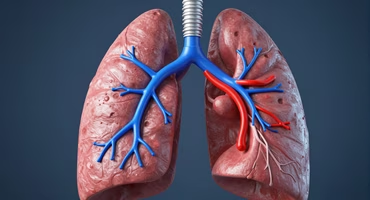
Respiratory Physiology
Respiratory physiology research at INSTAR examines gas exchange efficiency, airway mechanics, and the neural control of breathing using pulmonary function assessment, single-unit recordings from respiratory motor neurons, and integrative computational models of the respiratory control system. Understanding ventilatory failure and hypoxic adaptation informs both clinical management of lung disease and human performance in extreme environments.
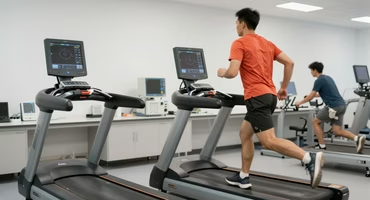
Exercise Physiology
Exercise physiology at INSTAR examines the systemic metabolic, cardiovascular, and musculoskeletal responses to physical activity across fitness levels and clinical populations. Measurement of maximal oxygen uptake, lactate threshold dynamics, and body composition informs both athletic performance optimization and exercise-based rehabilitation protocols — with applications to chronic disease management and STEM workforce health that align with national public-benefit priorities.
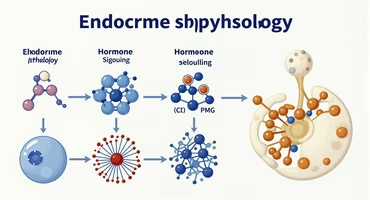
Endocrine Physiology
Endocrine physiology research at INSTAR explores hormonal regulation of metabolism, growth, reproduction, and neuroendocrine stress responses. Hormone quantification, receptor pharmacology, and model organism genetics provide mechanistic entry points into signaling cascades underlying metabolic syndrome, reproductive endocrinology, and stress-related disease. Researchers with backgrounds in integrative physiology or endocrinology are encouraged to explore the INSTAR Fellowship at /fellowship/.
Grounded in Open Physiology Data
INSTAR's physiology research relies on publicly accessible clinical measurement databases and national health surveys to ensure that findings on organ function, physiological adaptation, and health outcomes are grounded in representative, reproducible data. Open physiological data accelerates discovery and supports rigorous cross-cohort comparison.
Our primary open physiology sources:
- PhysioNet — open repository of physiological time-series data including ECG, EEG, and ICU monitoring records used for cardiovascular and critical care research.
- CDC NHANES — National Health and Nutrition Examination Survey data providing gold-standard physiological measurements from a nationally representative U.S. sample.
- NIH — biomedical datasets and research repositories supporting translational physiology research across organ systems and disease states.
- Data.gov — federal public health and human performance datasets supporting applied physiology and occupational health research.
OUR PARTNERS






For Researchers
Join the INSTAR Fellowship
The INSTAR Fellowship is an open citizen-scientist program — no minimum degree required, selection based on fit with our research culture. Structured mentorship, interdisciplinary scope, and the freedom to pursue hard problems.