
Medicine Research
INSTAR's medical research program develops and evaluates diagnostic technologies, therapeutic strategies, and clinical methodology frameworks that address unmet needs across disease categories. Interdisciplinary teams draw on biomedical engineering, pharmacology, data analytics, and AI to accelerate the path from biological insight to validated clinical approach — supporting the national priority of maintaining American leadership in biomedical science.
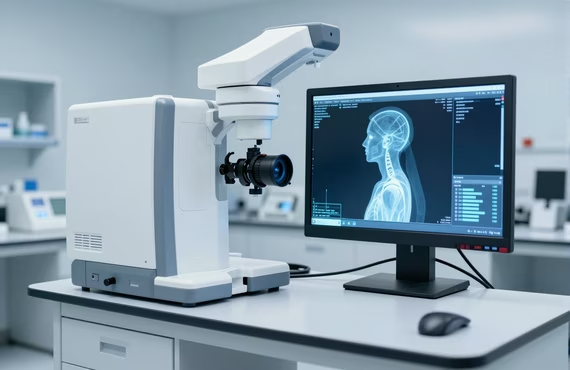
Diagnostics & Imaging
INSTAR's diagnostics research focuses on next-generation tools for earlier, more precise disease detection. Research interests span point-of-care molecular assays, AI-assisted medical image analysis, and minimally invasive biosensing approaches. A core emphasis is integrating multi-modal biomarker data — genomic, proteomic, and imaging — through machine learning pipelines capable of detecting disease signatures well before clinical symptoms emerge, including for neurodegenerative and infectious conditions.
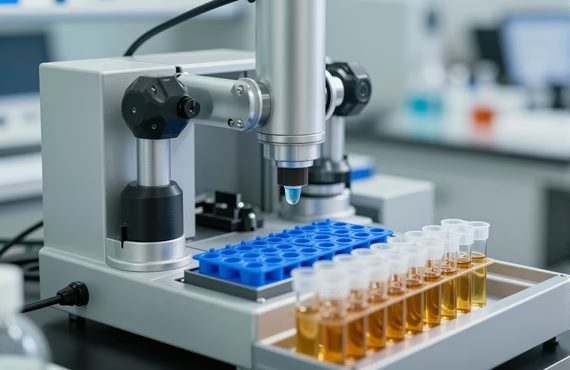
Therapeutics & Drug Discovery
INSTAR's therapeutic research applies computational drug design, high-throughput virtual screening, and organoid-based disease modeling to identify and optimize candidate compounds. Priority domains include oncology, autoimmune conditions, and antimicrobial resistance — a public-health challenge of particular national urgency. AI-driven molecular property prediction guides synthesis priorities, reducing the resource burden of traditional lead discovery while improving the quality of candidates that advance to biological evaluation.
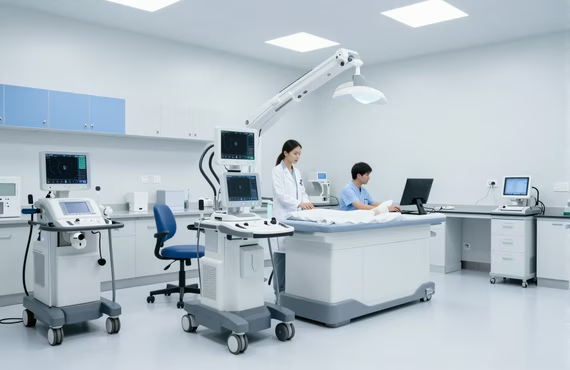
Clinical Trial Innovation
INSTAR's clinical methodology research addresses structural inefficiencies in how medical interventions are evaluated. We study adaptive trial designs, decentralized trial platforms that expand geographic access, and Bayesian statistical frameworks that extract more decision-relevant signal from smaller sample sizes — without compromising rigor. This methodological work serves a public benefit function: more efficient trials mean faster access to effective treatments and more equitable inclusion of underrepresented populations. Physician-scientists, biostatisticians, and researchers at all levels may explore the INSTAR Fellowship at /fellowship/.
Grounded in Open Health Data
INSTAR's medical research is built on publicly accessible clinical and population health datasets that support reproducibility and enable rigorous, large-scale evaluation of health technologies and outcomes. Transparent, open data is essential for conducting research that is free from commercial bias and genuinely oriented toward public benefit.
Our primary open medical sources:
- NIH — federal biomedical research datasets, grant databases, and clinical evidence repositories supporting translational medicine research.
- CMS Data — Medicare and Medicaid claims data enabling large-scale analysis of healthcare utilization, outcomes, and cost.
- CDC WONDER — public health surveillance data on mortality, disease incidence, and population health trends across the United States.
- ClinicalTrials.gov — registry and results database for clinical studies, used to evaluate trial design quality and evidence gaps.
OUR PARTNERS






Philanthropy & Grants
Fund Independent Science
INSTAR Lab is a 501(c)(3) nonprofit. Your tax-deductible contribution directly supports public-benefit research in AI, quantum science, health, energy, and the broad sciences.