
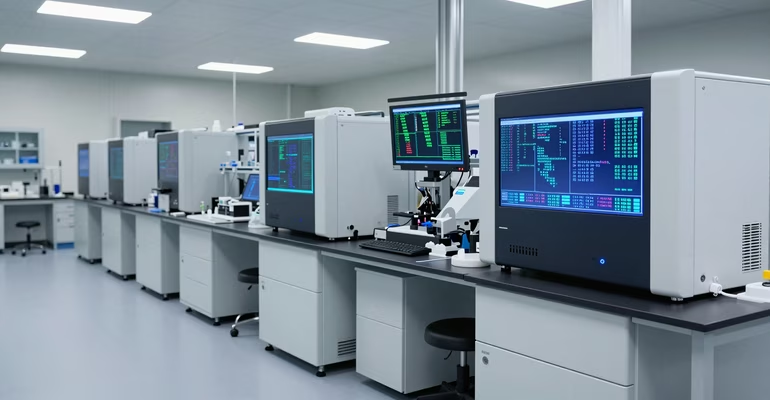
Genetics Research
INSTAR's genetics program sits at the center of one of the most consequential scientific developments of the past generation: the capacity to read, interpret, and edit genomes at scale. We investigate heredity, gene regulation, and genomic architecture using sequencing platforms, computational pipelines, and functional editing tools — asking not just what genomes contain but how they work and how variation in their sequence and structure shapes biological outcomes from development to disease.
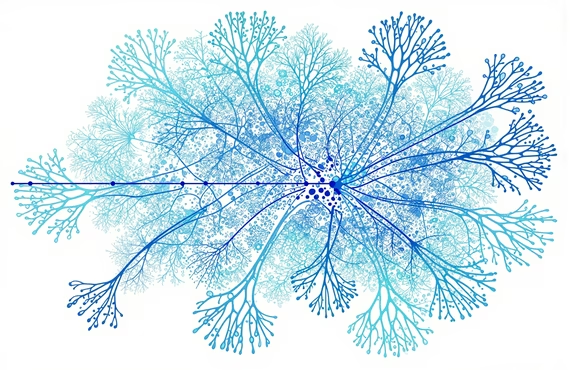
Genomics & Sequencing
High-throughput sequencing has transformed genetics from a discipline constrained by what could be measured one gene at a time into one capable of characterizing entire genomes, transcriptomes, and epigenomes simultaneously across thousands of individuals or cell types. We develop and apply the analytical pipelines needed to extract biological signal from these data at scale — identifying structural variants, cis-regulatory elements, and epistatic interactions that connect genomic architecture to measurable traits. The computational challenge is as demanding as the biological one, and INSTAR's data analytics capability is a core enabling asset for this work.
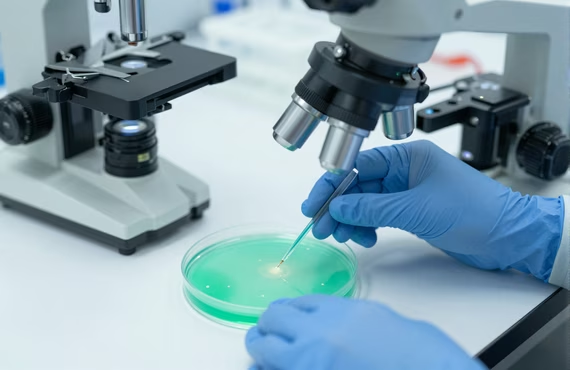
Gene Editing & Functional Genomics
Knowing where a gene is in the genome and knowing what it does are different problems. CRISPR-Cas systems, base editing, and prime editing have made the second problem tractable at scale, enabling systematic functional annotation of coding sequences and regulatory elements across the genome. We use these tools in cell lines and model organisms to study gene function in developmental processes, immune regulation, and neurological phenotypes — building the functional map that sequence data alone cannot provide.
INSTAR approaches genetics research with rigorous ethical standards governing data privacy, informed consent, and responsible application of genome-editing technologies. Researchers who want to develop independent research capacity within a collaborative interdisciplinary environment are encouraged to explore the INSTAR Fellowship at community/fellowship.
GROUNDED IN OPEN DATA
INSTAR Lab grounds its genetics research in transparent, publicly available datasets for reproducibility and public accountability. We integrate controlled-access genomic repositories and open sequence archives to conduct rigorous, peer-verifiable computational genetics research.
NCBI dbGaP
Database of Genotypes and Phenotypes used to access human genetic variation data for our population genetics and disease-association research.
GenBank
International nucleotide sequence database from NCBI that provides the foundational sequence data for our bioinformatics and comparative genomics analyses.
NIH Genomic Data Commons
Harmonized cancer genomics data from NIH used in our cancer genomics and precision medicine research programs.
data.gov
Federal open-data portal providing NIH, CDC, and NCI datasets relevant to population health and genomic epidemiology.
OUR PARTNERS






For Researchers
Join the INSTAR Fellowship
The INSTAR Fellowship is an open citizen-scientist program — no minimum degree required, selection based on fit with our research culture. Structured mentorship, interdisciplinary scope, and the freedom to pursue hard problems.