
Our Process
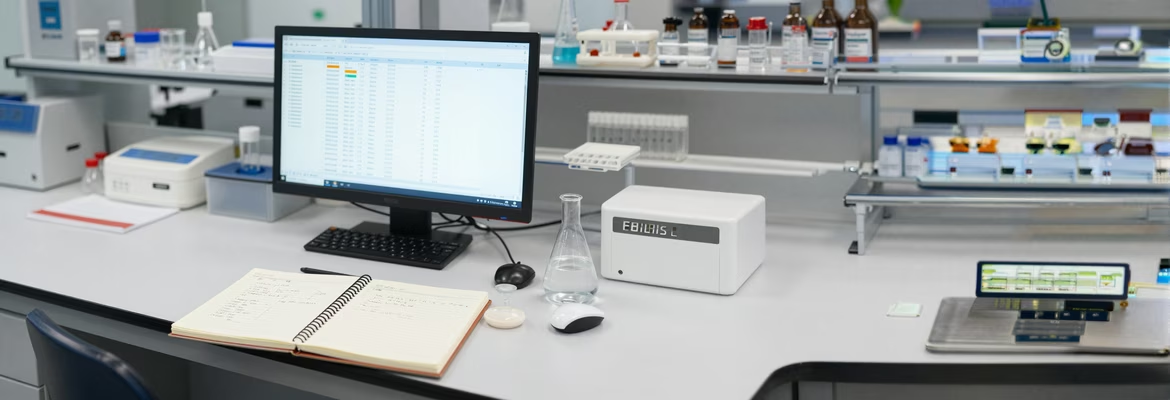
INSTAR Lab's research process integrates rigorous scientific methodology with institutional practices designed to maximize quality, reproducibility, and public benefit. From hypothesis formulation through peer review and knowledge transfer, every phase follows transparent, well-documented procedures that meet the highest standards of scientific integrity — the same standards expected of recipients of federal research support and the hallmark of credible independent research institutes.

Research Methodology
INSTAR researchers follow a systematic approach: identify the question, review existing knowledge, formulate testable hypotheses, design experiments with appropriate controls, collect and analyze data using validated methods, interpret results conservatively, and submit findings for peer review. We emphasize pre-registration of study designs, statistical power analysis, and blinding protocols where applicable. Institutional methodology guidelines — developed with input from domain experts across all research thrusts — provide discipline-specific best practices while maintaining universal standards for rigor, transparency, and responsible conduct of research.
Quality, Reproducibility & Ethics
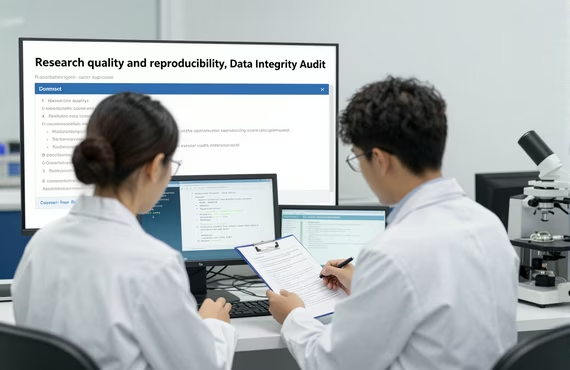
INSTAR maintains research quality oversight that encompasses data integrity verification, statistical analysis review, and compliance with ethical guidelines. All computational analyses are accompanied by documented code and reproducible environments that enable independent verification. Researcher training covers responsible conduct of research, data management, and the prevention of questionable research practices — requirements that parallel those of federal granting agencies and reflect INSTAR's obligation as a public-benefit nonprofit.
Research activities involving human subjects, biological materials, or hazardous substances are conducted under applicable institutional oversight consistent with federal regulations. Safety programs covering biosafety, chemical hygiene, and data privacy protect researchers, collaborators, and the broader community. This layer of accountability is not a compliance formality — it is foundational to the trust that sustains productive scientific collaboration.
BUILT ON PUBLIC DATA
INSTAR Lab grounds its research process in transparent, publicly available datasets so that results are reproducible and accountable to the public. Our methodological standards include rigorous citation of primary data sources, and wherever feasible, studies draw directly on the following authoritative federal and scientific data portals:
Data.gov
The U.S. government open data portal — cross-domain federal datasets used as primary inputs for applied science, policy analysis, and baseline environmental studies.
NIST
Measurement standards and benchmarks ensuring INSTAR's computational and materials results are calibrated against authoritative national references.
U.S. Census Bureau
Demographic and socioeconomic data forming the empirical foundation of INSTAR's social science and workforce research programs.
NOAA
Atmospheric, oceanic, and climate datasets providing reproducible environmental baselines for Earth science and energy modeling studies.
NASA Open Data
Space science and remote sensing data supporting reproducible analyses in INSTAR's outer space and orbital systems programs.
NIH
Clinical and genomic datasets that form the evidentiary base for INSTAR's health, medicine, and life sciences research.
DOE OSTI
Energy research publications providing peer-reviewed scientific literature informing INSTAR's energy and HPC program methodology.
OUR PARTNERS






For Researchers
Join the INSTAR Fellowship
The INSTAR Fellowship is an open citizen-scientist program — no minimum degree required, selection based on fit with our research culture. Structured mentorship, interdisciplinary scope, and the freedom to pursue hard problems.