
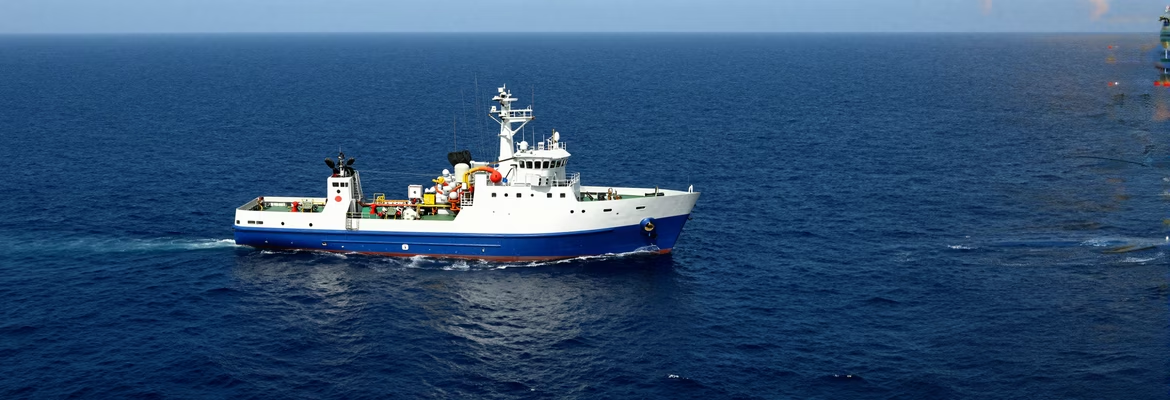
Ocean Science Research
INSTAR's ocean science program investigates marine ecosystems, ocean circulation, and biogeochemical cycles through integrated observational and computational approaches. We apply AI-driven data analytics to ocean observation datasets and develop high-resolution models of the world's largest interconnected system — advancing the scientific basis for climate prediction, fisheries management, and ocean resource policy.
Physical Oceanography
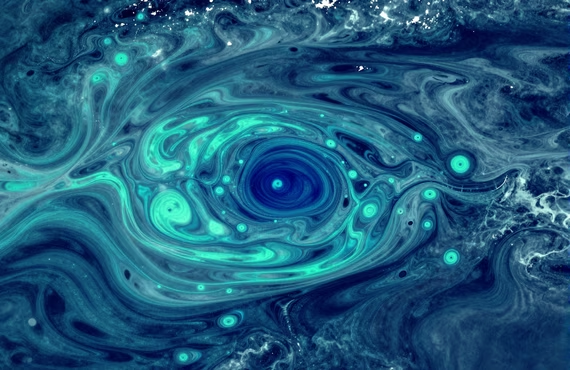
INSTAR's physical oceanography research examines ocean currents, thermohaline circulation, and wave dynamics by analyzing satellite altimetry, Argo float network data, and outputs from coupled atmosphere-ocean models. A central research interest is how mesoscale eddies transport heat and nutrients across ocean basins — a process with direct consequences for regional climate prediction and marine productivity. Understanding circulation variability, including shifts in the Atlantic Meridional Overturning Circulation, carries urgent implications for coastal communities and federal climate-resilience planning.
Marine Ecology & Conservation
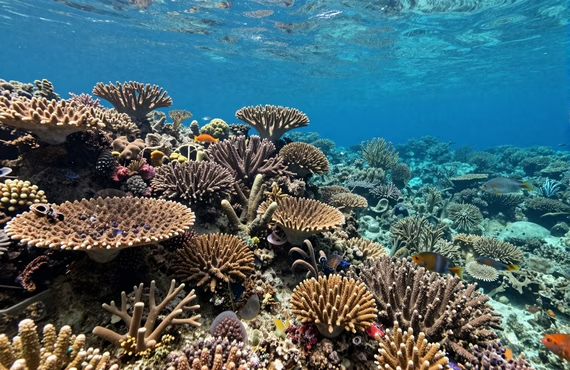
INSTAR's marine ecology research investigates biodiversity patterns from coastal estuaries to deep-sea habitats using environmental DNA sampling, acoustic telemetry, and autonomous underwater imaging. A priority question is how interacting anthropogenic stressors — ocean warming, acidification, deoxygenation, and pollution — compound to restructure marine communities and degrade ecosystem services. This work provides the empirical foundation for evidence-based marine protected area design and fisheries management policy.
Interdisciplinary research interests extend to ocean acoustics, marine geochemistry, and polar oceanography, where rapid environmental change is generating urgent scientific questions with direct governance implications. The INSTAR Consortium — including Focus Hive, World Enterprise Group, Dream Limited, Curiosity Research Corp, Ravonics, Global Enterprise, and Tao Learning — brings complementary analytical and data capabilities to ocean science investigations. Researchers in oceanography or marine ecology are welcome to explore the INSTAR Fellowship at /fellowship/.
Grounded in Open Ocean Data
INSTAR's ocean science research draws on the world's leading open marine observation networks and climate archives to ensure that our modeling and analysis can be independently reproduced and compared against long-term records. Transparent, freely accessible ocean data is foundational to credible climate science and fisheries policy.
Our primary open ocean data sources:
- NOAA NCEI — comprehensive archive of oceanographic, atmospheric, and coastal observations used as the backbone for climate trend analysis.
- NOAA — satellite remote sensing, buoy networks, and operational ocean forecast products informing physical oceanography research.
- Argo Program — global array of profiling floats providing continuous temperature and salinity profiles of the ocean interior for circulation research.
- Data.gov — federal datasets on coastal ecosystems, fisheries, and marine policy supporting evidence-based ocean governance research.
OUR PARTNERS






For Researchers
Join the INSTAR Fellowship
The INSTAR Fellowship is an open citizen-scientist program — no minimum degree required, selection based on fit with our research culture. Structured mentorship, interdisciplinary scope, and the freedom to pursue hard problems.