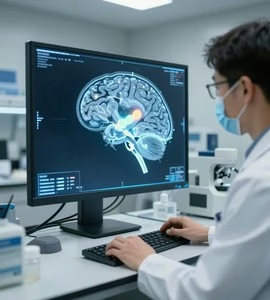
Research interests include exoplanetary characterization, interstellar medium mapping, and multi-spectrum signal intelligence for deep-space observation.
Energy systems / research at the infrastructure scale
Energy research
FUTURE OF ENERGY RESEARCH
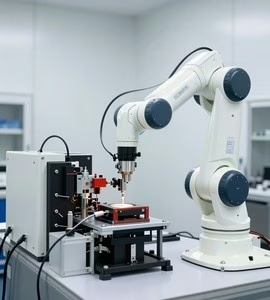
Research questions in fusion plasma confinement, solid-state quantum batteries, and grid-scale superconducting storage for a post-carbon energy infrastructure.
AI compute / quantum systems / high-performance infrastructure
AI / quantum / HPC
NEXT-GEN COMPUTE SYSTEMS
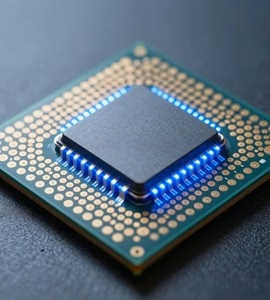
Research interests include post-quantum cryptography, formally verified secure kernels, and neuromorphic HPC architectures for resilient autonomous systems and exascale AI.
Put frontier science behind the question that matters.
INSTAR combines advanced AI, quantum research, high-performance computing, and domain science to turn ambitious objectives into testable programs. From energy and space to health, agriculture, and fundamental physics, we define the question, engineer the method, measure uncertainty, and deliver evidence, models, prototypes, or data a sponsor can evaluate.
INSTAR connects scientific questions to advanced AI, quantum methods, computation, sensing, and domain science. Use the process map to review how a program is framed, tested, and translated into technical outputs.
The research loop
How a program earns confidence.
Text guide: a question is defined, a method is selected, the result is tested, and the outputs are documented for the next decision.
Question
Define the scientific or mission question and the decision it must inform.
Scope
Method
Select the AI, quantum, computational, experimental, or domain method that fits the question.
Design
Validation
Test assumptions, measure uncertainty, and document what holds up under review.
Verify
Deliverable
Translate validated work into data, models, reports, prototypes, or other usable outputs.
Transfer
Map layerResearchApplicationSponsor review
The animated map is unavailable here. The four-stage guide remains available above, and the pathway links remain available in the orientation text.
Research portfolio
Move from domain to program.
Browse by research area, technical method, or scientific application, then review the program or capability behind it.
The INSTAR Fellowship is an open citizen-scientist program for people who want to work on difficult questions across AI, quantum science, and the broader sciences. Fellows receive structured mentorship, interdisciplinary scope, and room to pursue a serious research problem.
Bring a funding or contract requirement to the research frontier.
Tell us the solicitation, contract requirement, mission need, or scientific question you are evaluating. We can point you to the relevant program, capability, or technical conversation.
INSTAR Lab uses cookies and similar technologies, and works with service and advertising partners, to keep this site running, understand how it is used, and measure our outreach and campaigns. Choose Accept all, or Customize to pick the categories you allow.






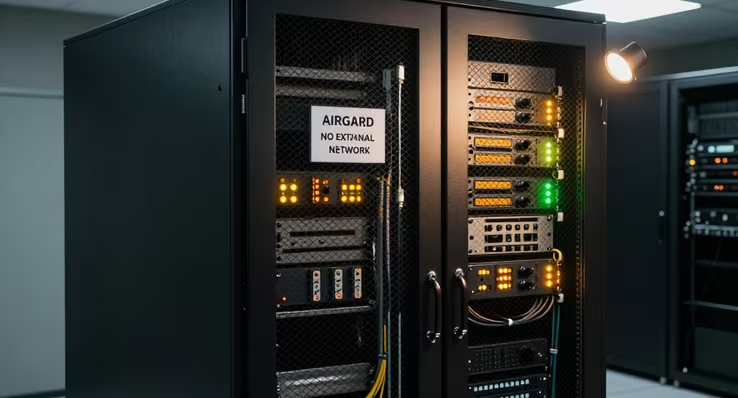
 Secure compute
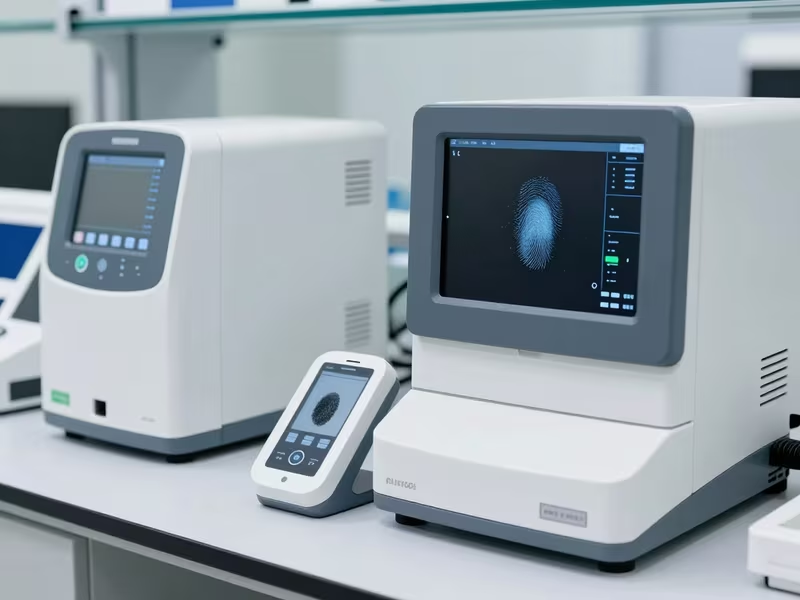 Applied sensing
 Machine intelligence